

Hardwood floors are a beloved feature in many homes, given that they provide ample warmth, elegance, and timeless character to beautify your home and add a touch of elegance. When initially installed, they offer a pristine, uninterrupted surface that anchors the design of a room. However, wood is a natural, porous material that reacts constantly to its environment and the daily traffic it endures. Over the years, the ongoing cycle of changing seasonal humidity, shifting temperatures, heavy foot traffic, and the inevitable accidents of daily life take their toll.
While routine maintenance and occasional refinishing can extend the lifespan of these surfaces significantly, there inevitably comes a point when sanding and restaining are no longer viable solutions. Recognizing the threshold between floors that simply need a bit of restorative care and those that are functionally exhausted is crucial for maintaining the safety, structural integrity, and aesthetic appeal of your home. It can be easy to ignore a minor imperfection or brush off a strange noise, but these subtle clues often indicate deeper, underlying problems (mysterious sounds around the house are often indicative of issues behind the walls, so these are always worth looking into in general). Here we’ll take a look at some of the indicators that your current flooring has reached the end of its natural lifespan and requires a complete overhaul.
1. Excessive and Persistent Squeaking
A solitary squeak when stepping on a specific spot is often just a quirk of older homes. Wood naturally expands and contracts, and occasionally, a board might rub against a stray nail where you can’t see. However, when a symphony of creaks, groans, and loud squeaks accompanies your every step across the room, there might be deeper issues at play. This persistent noise can mean the hardwood planks have fully separated from the subfloor beneath them. Over time, the adhesive may fail, or the fasteners may loosen due to constant friction and structural movement. Sometimes, the issue lies even deeper, indicating that the subfloor itself has begun to warp or degrade, compromising the stable base required for the surface planks. When the movement becomes widespread across the room, no amount of localized repair or temporary reinforcement will solve the problem. The structural harmony between the joists, the subfloor, and the hardwood has completely broken down, necessitating a complete removal and replacement to restore a silent, solid walking surface.
2. Deep Scratches, Gouges, and Splintering
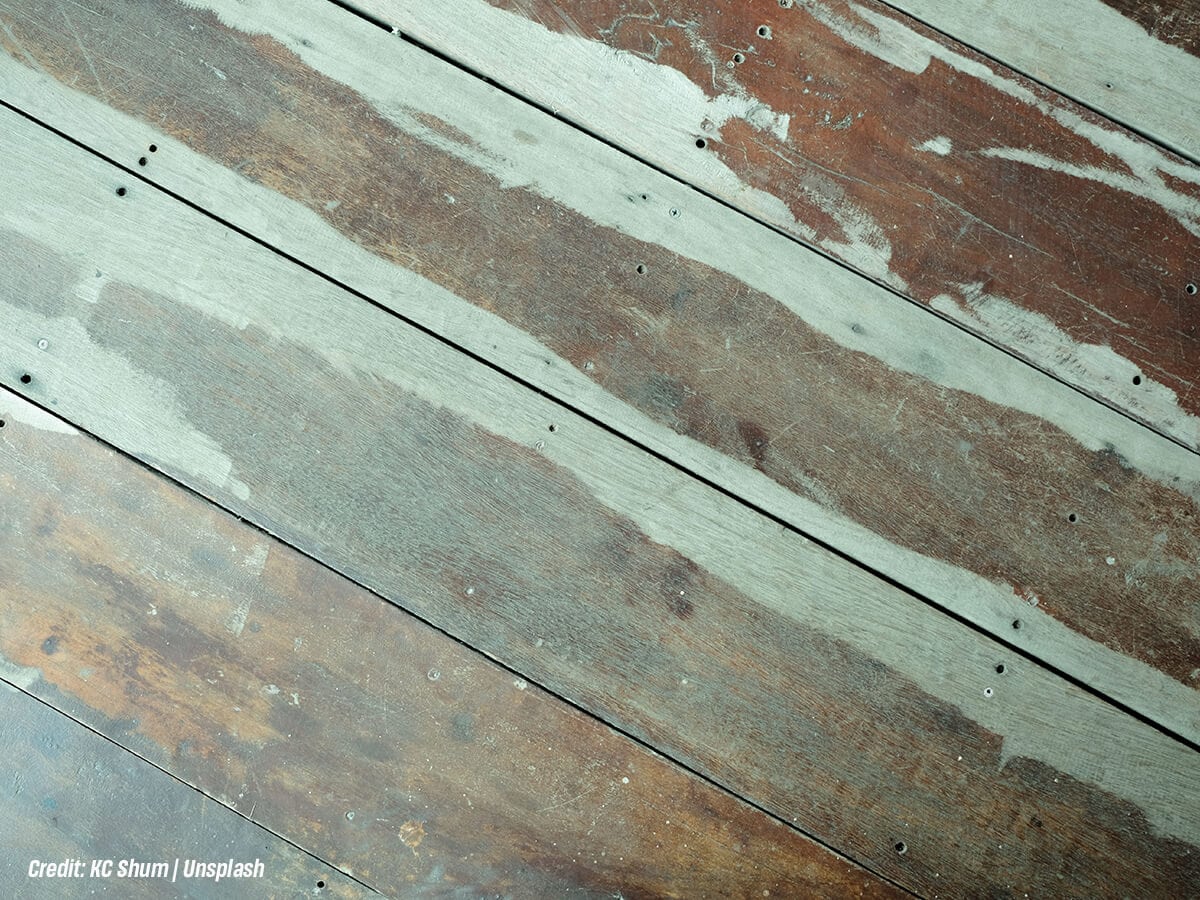
General wear should be expected on any walking surface; years of walking on that floor will reach their logical conclusion at some time. Surface-level scratches (perhaps from moving chairs or light pet traffic) are a sign your floor needs a refinishing, and this can easily be buffed out or addressed during a standard process. The concern arises when the physical damage penetrates deeply into the wood fibres. If you notice structural gouges that extend well beyond the surface, exposing the raw, unprotected wood beneath the stain, the integrity of those specific planks is permanently compromised. Furthermore, when the wood begins to splinter and chip away along the edges, it creates a significant safety hazard for bare feet. Splintering indicates that the wood has become brittle, losing its natural flexibility, moisture, and strength. When these deep abrasions and splintered sections are scattered widely across the entire floor rather than isolated in one easily replaceable section, patching becomes impossible. Attempting to sand down a floor with damage this profound would require grinding away too much material, leaving the boards dangerously thin and prone to immediate cracking.
3. Severe Water Damage and Cupping
Water is the ultimate adversary of interior hardwood flooring. Whether from a slow, hidden plumbing leak, an overflowing appliance, or the lack of a proper vapour barrier beneath the installation, prolonged exposure to water causes irreversible damage. And this is equally true of any water damage; knowing how to deal with water damage (particularly in the case of basement floods) is a must for looking after your home. One of the most obvious physical signs of that water damage is cupping, a condition where the edges of the wooden planks rise noticeably higher than the centre, creating a wavy, washboard-like texture across the floor. Conversely, crowning occurs when the centre swells higher than the edges. If the moisture intrusion is severe, the wood will absorb the water, swell intensely, and physically push against adjacent boards. Once the wood has warped to this extreme degree, it rarely returns to its original flat state, even after the area is completely dried out. Additionally, severe water damage often leads to dark, pervasive stains or deep-set mould that penetrates entirely through the wood. In these instances, the planks are beyond repair, and so the only viable measure at this point is replacement of those damaged planks.
4. Large, Permanent Gaps Between the Planks
Wood is hygroscopic, meaning it naturally absorbs and releases moisture depending on the ambient humidity of the room. During dry winter months, it is entirely normal for minor gaps to appear between the floorboards as the wood slightly contracts. These gaps typically close back up tightly when humid summer weather returns. However, if you are observing substantial gaps (perhaps half a centimetre or more in width) that remain consistently open regardless of the season, you have a permanent problem. This chronic separation occurs when the wood has lost its elasticity and ability to expand, often due to decades of extreme environmental fluctuations. These wide gaps act as permanent traps for dirt, debris, and allergens, and create hard-to-reach areas within the floor that are impossible to clean properly. Furthermore, large gaps indicate that the boards are no longer locking together tightly, which compromises the lateral stability of the entire flooring system.
5. Soft, Spongy, or Bouncing Boards
When you walk across a healthy hardwood floor, it should feel incredibly solid and unyielding beneath your feet. If you step onto a section of the floor and notice a distinct bounce, a spongy sensation, or a feeling of softness, then that is an immediate red flag. Soft boards are a definitive indicator of severe internal rot. This type of degradation is almost always caused by a long-term, hidden moisture problem that has allowed the wood to decay from the bottom up. By the time the top surface feels soft to the touch, the internal structure of the plank is entirely compromised. More alarmingly, a bouncing floor often suggests that the subfloor or the heavy structural joists supporting the room are themselves rotting and failing. In these scenarios, replacing the surface hardwood is absolutely mandatory, and it must be accompanied by a thorough inspection of the underlying support structures.
6. Extensive Discolouration and Fading
While all natural wood floors will experience some degree of colour change over their lifespan due to oxidation and exposure to ambient light, extreme and uneven discolouration can severely detract from the aesthetic value of the space. Finding reliable floor cleaners for your hardwood floors does help, but you’ll eventually reach a point where the discolouration simply can’t be addressed any further. Years of direct exposure to intense ultraviolet rays pouring through large windows can bleach the wood, leaving stark, faded patches that contrast heavily with areas protected by rugs or large furniture. Beyond sun damage, deep-set, dark stains from old spills, pet accidents, or localized liquid pooling can penetrate so deeply into the grain that they bypass the protective finish entirely. When these stains permeate the entire thickness of the board, no amount of heavy sanding will remove them. If the floor resembles a patchwork quilt of faded spots, dark rings, and irregular bleaching, a full replacement is required to achieve a clean, uniform look.
7. The Floor Has Reached Its Sanding Limit
Solid hardwood floors are highly valued primarily because they can be sanded down and refinished to look brand new. However, this restorative process involves physically grinding away a top layer of the wood each time. The planks are manufactured with a tongue-and-groove system that securely locks them together. You can only sand the surface so far until you get too close to the top of the groove. If you sand past this critical point, the structural integrity of the locking mechanism is destroyed, and the boards will splinter and physically break apart underfoot. Most solid hardwood floors can handle a limited number of complete refinishing jobs before they become drastically thin. If your floor has already been sanded down multiple times in its history, and you are starting to see the heads of the fastening nails shining through, or if the wood feels incredibly thin and brittle, you have simply run out of workable material. The floor has successfully served its full lifecycle, and replacement remains your only permanent option.
Deciding to replace your aging hardwood flooring is a significant investment, but it’s an investment in your safety and comfort at home. Like other signs of damage or wear around the house, these critical warning signs are a clear indicator to act to preserve your home and prevent more extensive structural issues later. Once taken care of, a fresh, properly installed floor ensures lasting safety, immense comfort, and beautifully renewed interior living spaces.
Are you ready to transform your space and say goodbye to squeaky, damaged floors? Trust our team at Capital Hardwood Flooring to bring your vision to life with high-quality materials and professional installation. Contact us today at 416-536-2200 to schedule your professional consultation and take the first step toward a beautifully upgraded home!