

Two years is often the critical threshold where the promise of indestructible luxury vinyl plank (LVP) meets reality. Gaps appear, planks click, and finishes dull; signalling an abrupt end to the honeymoon phase. This failure usually stems not from defective manufacturing, but from fundamental environmental or installation errors ignored at the start.
Why Is My “Indestructible” Vinyl Flooring Failing?
The marketing around vinyl flooring often glosses over the technical requirements in favour of selling a lifestyle of care-free maintenance. This creates a dangerous disconnect. Homeowners assume “waterproof” means they can ignore moisture, and “durable” means they can ignore subfloor prep. They are wrong.
When a vinyl floor starts to fail after a couple of heating and cooling seasons, it is usually because the physical constraints of the material were ignored. The product is reacting to stresses it was never designed to handle. Understanding these stresses is the only way to fix the current issue or prevent it from happening next time.
Is Your Subfloor Sabotaging Your Planks?
By far, the most common reason for vinyl failure is an inadequate subfloor. Since vinyl planks are relatively thin (compared to 19 mm hardwood) and often rely on a click-lock mechanism, they are incredibly sensitive to what lies beneath them.
- The Flatness Requirement: “Flat” and “level” are different things. Your floor doesn’t need to be level, but it must be flat. Most manufacturers require a variance of no more than 5 mm over a 3-metre radius. If you have dips or humps exceeding this, the vinyl plank will bend every time you step on it. Over two years of constant flexing, the brittle locking mechanism on the edge of the plank fatigues and snaps. Once the lock breaks, the plank separates, gaps open up, and the floor is compromised.
- Moisture From Below: Vinyl is waterproof from the top down. It is not waterproof from the bottom up. If you installed vinyl over a concrete basement slab without proper moisture testing or a vapour barrier, hydrostatic pressure will force moisture vapour up. This vapour gets trapped under the vinyl. Over time, this can cause cupping in the planks and create a breeding ground for mould, leading to musty smells and potential health issues.
Did the Installation Ignore Thermal Expansion?
There is a persistent myth that because vinyl is plastic, it doesn’t move. This is false. While it doesn’t absorb ambient humidity like traditional wood flooring in Toronto, vinyl is highly reactive to temperature changes.
Every manufacturer mandates an expansion gap around the entire perimeter of the room; usually 6 mm to 10 mm. This space is necessary because when your home heats up in the summer, the entire floor expands. If that gap isn’t there, the expanding floor hits the wall.
With nowhere else to go, the pressure forces the planks upward in the middle of the room, creating what is known as “tenting” or buckling. During winter, the floor also contracts, which can pull planks apart if they were installed under tension.
Did You Buy the Wrong Class of Material?
Not all vinyl is created equal; premature wear often signals a mismatch between product grade and lifestyle.
- Wear Layer Thickness: Durability relies on the protective top coating. A 6-mil layer is sufficient for guest rooms but will fail quickly in high-traffic kitchens. For main living areas, anything less than a 20-mil commercial-grade layer is a gamble.
- SPC vs. WPC Core: Stability depends on the core. Stone Plastic Composite (SPC) is dense and rigid, resisting temperature shifts and heavy furniture dents. Older Wood Plastic Composite (WPC) is softer and warmer but prone to denting and thermal movement, leading to premature damage in busy homes.
Are Sun and Heat Warping Your Floors?

Canadian homes often feature large windows to capture natural light, especially in winter. However, concentrated sunlight can heat a dark vinyl floor up to 60°C or higher, far exceeding the ambient room temperature.
This intense, localized heat causes rapid expansion in just those sun-drenched planks. They expand faster than the surrounding shaded areas, tearing the locking systems apart or causing severe buckling. High-quality SPC vinyl is engineered to handle higher temperatures, but cheap vinyl will fail rapidly under direct solar loading.
Can Better Materials Fix These Issues?
The industry is painfully aware of these shortcomings and is actively developing more stable, responsible materials. The focus is shifting toward products that are not only physically robust but also environmentally sound.
Innovations in manufacturing are creating denser, more reliable cores. According to a study, Eco-Luxury Vinyl Plank (eLVP) flooring uses recycled HDPE (rHDPE) to reduce plastic waste and improve environmental and health issues, while lowering production costs in the construction industry (Nhari et al., 2023).
These advancements suggest a future where the materials themselves are less prone to the structural failures we see today, offering better long-term performance while addressing sustainability concerns.
Are You Cleaning Your Floor to Death?
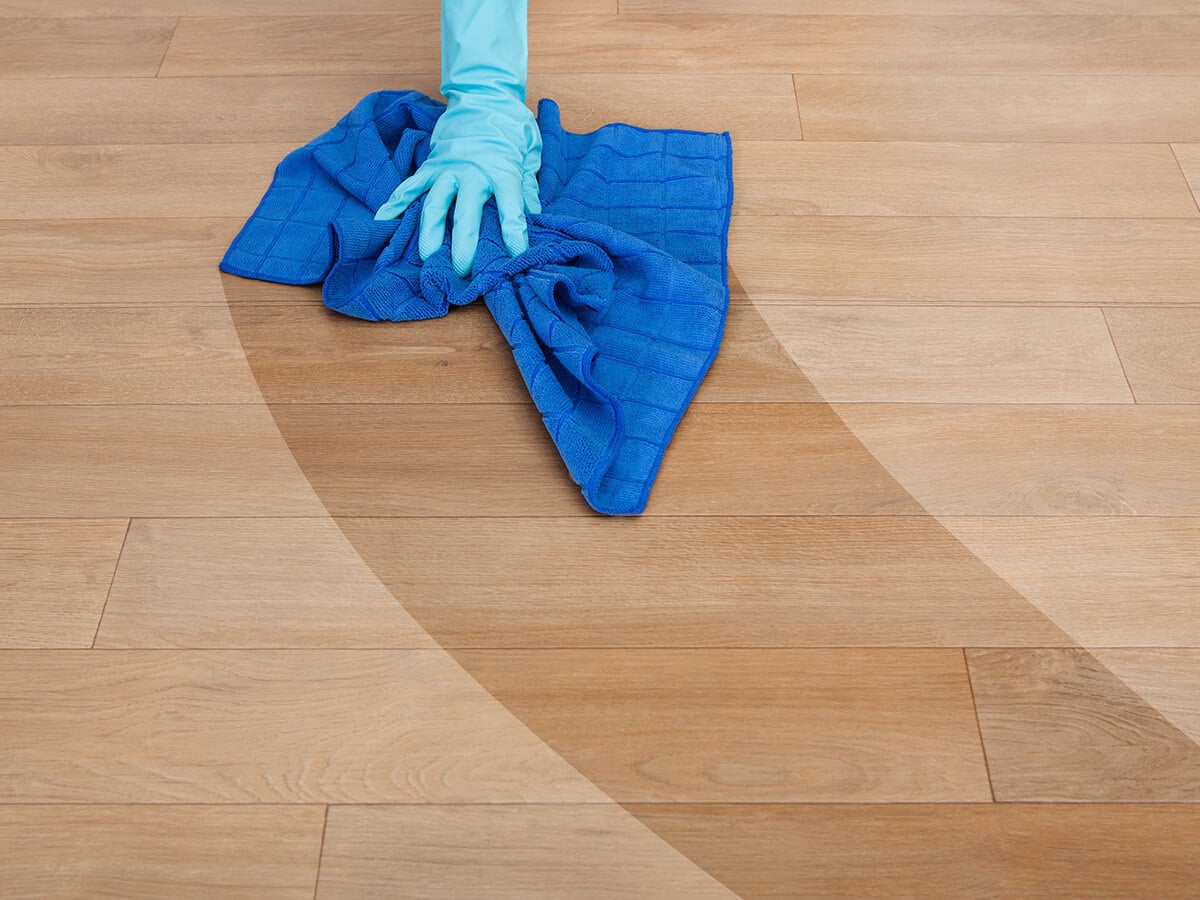
Sometimes, the damage is self-inflicted through improper maintenance. The two-year mark is often when the cumulative effect of bad cleaning habits becomes visible.
The number one enemy of vinyl flooring is the steam mop. The intense heat forces moisture deep into the joints, regardless of how “waterproof” the lock claim is. Repeated steam mopping will cause the edges of the planks to swell and peel.
Using harsh cleaners that contain wax or polish will also eventually build up a hazy film that attracts dirt, making the floor look perpetually dirty and dull, regardless of its actual condition.
Stop Compromising and Start Living on Your Floors
A floor that fails in two years is not an inconvenience; it is a failed investment. Don’t accept gaps, clicks, or dullness as normal wear and tear. If you are done with problems and ready for solutions, you need guidance based on expertise, not just sales pitches.
For the highest quality selection and professional advice on vinyl flooring in Toronto, contact the experts at Capital Hardwood Flooring at (416) 536-2200. Get it right this time, and enjoy your floor for decades.