
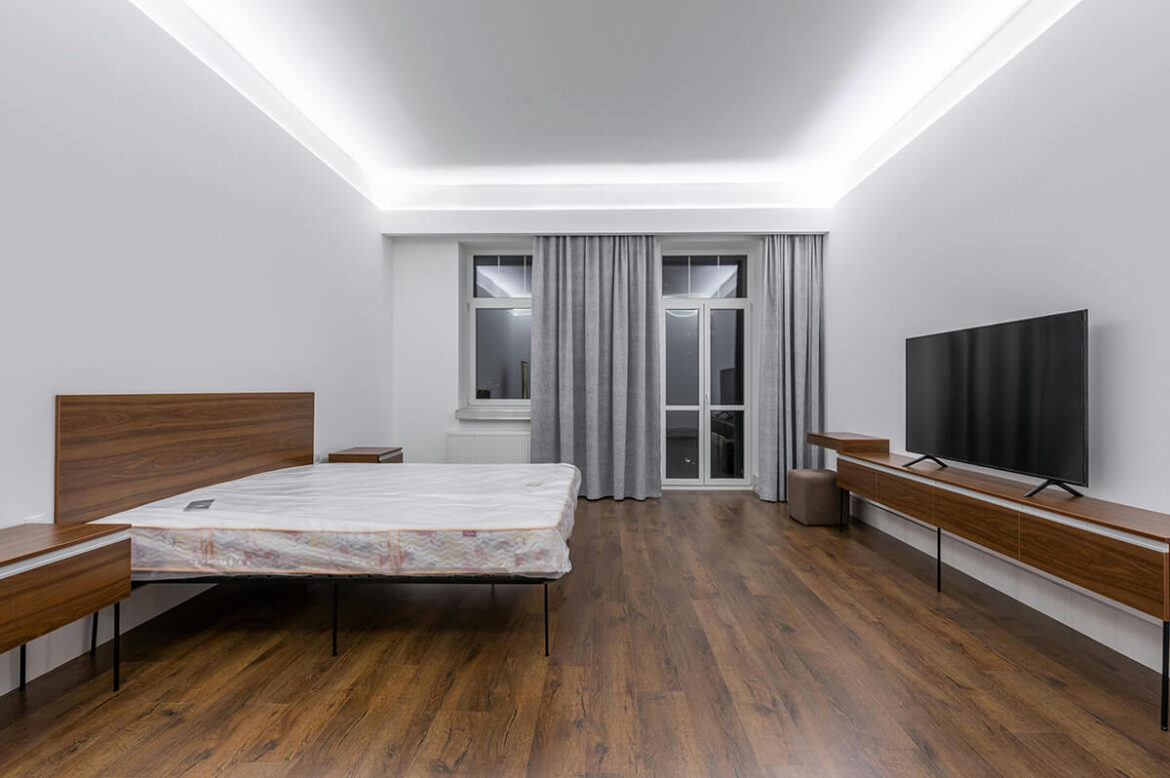
February in Canada stress-tests your home with dry air and violent temperature swings. While wood shrinks and tile freezes, vinyl flooring offers the premier technical solution. Designed to withstand this atmospheric abuse, it resists warping and cracking while keeping your feet warm.
Why Does Vinyl Flooring Outperform Organic Materials in Dry Air?
The primary threat to floors in February is dry air, not snow. Heating freezing air drops indoor Relative Humidity (RH) to desert-like levels (15-20%), which is catastrophic for solid hardwood. As moisture evaporates, wood cells collapse like drying straws, causing physical shrinkage. This creates unsightly gaps between planks; an inevitability of physics in Canadian winters, not a defect in the wood.
The Inert Advantage: Luxury Vinyl Plank (LVP), particularly the Rigid Core variety known as Stone Plastic Composite (SPC), ignores these laws.
- No Cellular Structure: Vinyl does not have plant cell walls to collapse. It is a synthetic composite that remains dimensionally stable regardless of how dry your home becomes.
- The Limestone Factor: The core of high-quality SPC vinyl is comprised largely of limestone powder. This mineral content renders the plank virtually immune to expansion and contraction caused by humidity fluctuations.
While your antique cabinets might be creaking and your doors might be sticking (or not latching) due to the shifting frames, a vinyl floor remains dead flat and tight. It provides the visual warmth of oak or walnut without the biological baggage that makes real timber so temperamental in the dead of winter.
How Does the Core Construction Resist Rapid Temperature Shifts?
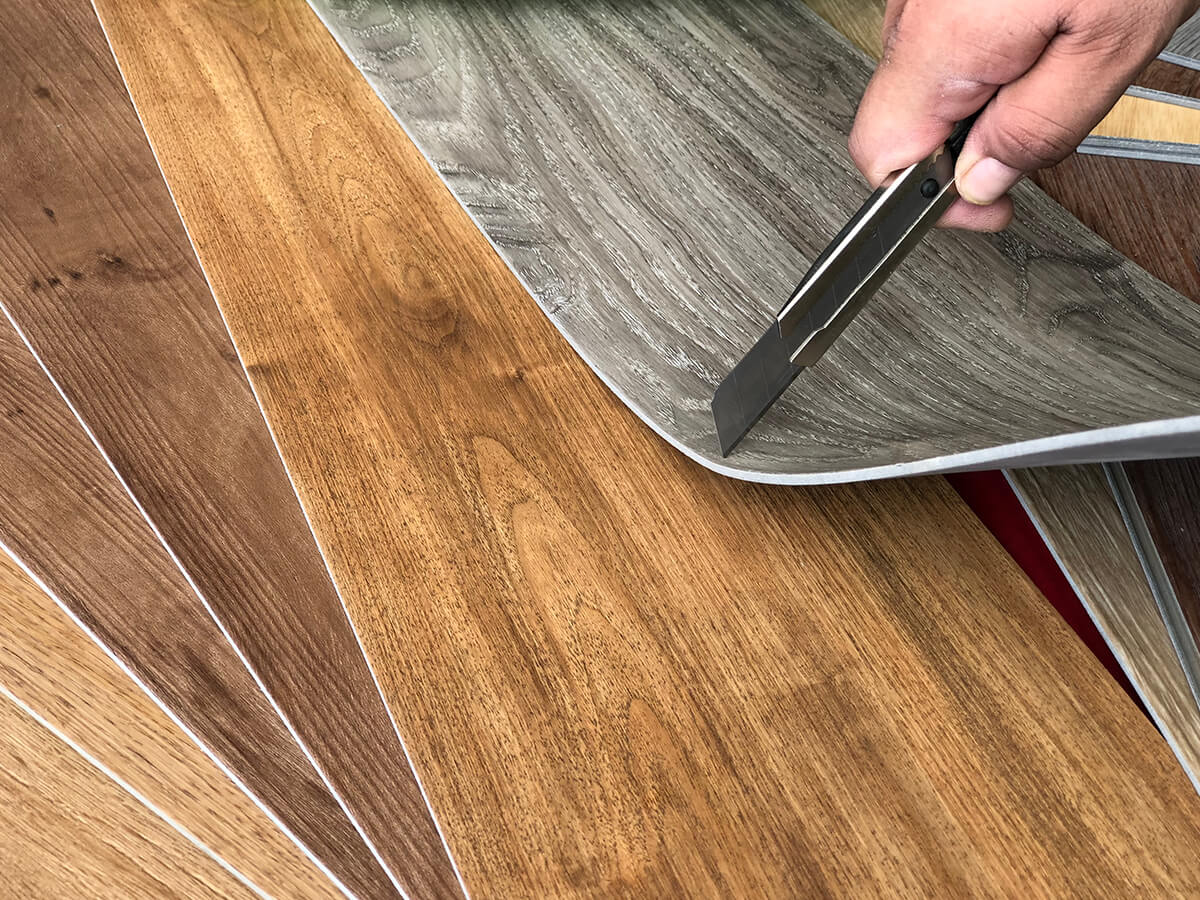
February is famously volatile. We often see swings from -20°C to +5°C in a matter of 48 hours. These rapid shifts affect the thermal envelope of your house. Windows transmit cold, drafts sneak under doors, and radiant heating systems cycle on and off aggressively.
Traditional laminate flooring, which is often confused with vinyl, typically uses a fiberboard core (essentially glued sawdust). When temperatures shift and humidity follows, fiberboard is highly reactive. It can swell at the edges (peaking) or shrink in the center.
The Engineering of SPC and WPC: Modern vinyl utilizes advanced core technologies that act as a thermal buffer.
- SPC (Stone Plastic Composite): As mentioned, this is dense and rigid. It creates a floor that is solid underfoot and practically indestructible. It transfers heat efficiently if you have radiant heating, but it does not warp when that heat is applied.
- WPC (Wood Plastic Composite): This core is slightly softer and warmer, containing foaming agents that create tiny air pockets. These pockets act as insulators, meaning the floor maintains a more consistent temperature even when the subfloor gets cold.
This stability means you can leave your home for a winter vacation, turn the thermostat down to save energy, and not worry about coming home to a buckled floor. The material is engineered to handle the thermal stress that would ruin lesser products.
Can Vinyl Really Handle the “Slush Factor”?
The second prong of February’s attack is the slush. You track it in on your boots, your dog brings it in on their paws, and kids drag it in on snow pants. This isn’t just water; it is a corrosive cocktail of melted snow, road salt, grit, and chemical de-icers.
The Porosity Problem:
- Hardwood: If salty slush melts onto a hardwood floor and sits there, the water penetrates the finish and the salt crystals grind into the grain. Over time, this causes “black staining” where the tannins in the wood react with the water and minerals.
- Tile Grout: While tile is waterproof, grout is porous. Salty water seeps into the grout lines, discolouring them and eventually breaking down the cementitious material.
The Hydrophobic Shield: Luxury vinyl is chemically inert and 100% waterproof; not just water-resistant.
- Surface Tension: The wear layer on quality vinyl is a clear urethane coating that prevents water from adhering. Puddles sit on top, waiting to be wiped away.
- Chemical Resistance: Vinyl is highly resistant to the chlorides found in road salt. While you should always clean up spills to prevent slip hazards, the salt itself will not eat into the finish or discolour the pattern as it would with natural materials.
- Seam Integrity: Modern click-lock mechanisms (like Uniclic or Valinge) create a watertight seal. This prevents the melting slush from seeping between the planks and damaging the subfloor underneath.
Is the “Plastic” Reputation Still Accurate?
For years, the hesitation regarding vinyl was environmental. It was seen as a “throwaway” plastic product. However, the industry has recognized that performance cannot come at the cost of the planet, especially for Canadian consumers who value sustainability.
Innovation is driving the sector toward a circular economy. According to a study, Eco-Luxury Vinyl Plank (eLVP) flooring uses recycled HDPE (rHDPE) to reduce plastic waste and improve environmental and health issues, while lowering production costs in the construction industry (Soh et al., 2023).
This is a game-changer. By integrating recycled High-Density Polyethylene (the material used in milk jugs and piping) into the manufacturing process, manufacturers are diverting massive amounts of plastic from landfills. This process creates a floor that is not only tough enough to handle a Toronto winter but also contributes to a reduction in global plastic waste. It allows homeowners to choose durability without compromising their ecological ethics.
How Does Thermal Conductivity Affect Your Comfort?
We have discussed the floor’s survival, but what about yours? February is the month of slippers. If you have ever stepped onto a slate or ceramic floor in a basement on a Tuesday morning, you know the shock. Stone and ceramic have high thermal conductivity, meaning they rapidly suck the heat out of your feet, making the floor feel significantly colder than the room air.
The Insulating Effect: Vinyl occupies a “Goldilocks” zone for thermal comfort.
- Ambient Temperature: Vinyl tends to stay closer to the ambient temperature of the room. It does not retain cold the way stone does.
- Underlayment: Most premium vinyl planks come with an attached underlayment made of cork or IXPE foam. This layer acts as a thermal break between the cold subfloor (especially concrete basements) and the surface you walk on.
This difference is palpable. In a basement renovation or a main floor living space, choosing vinyl over tile can raise the perceived temperature of the room by several degrees, reducing the load on your heating system and making the space genuinely usable during the coldest weeks of the year.
Is the Aesthetic Compromise Gone?
Gone are the days of plastic-looking floors. Modern High-Definition printing and Embossed-in-Register (EIR) textures now perfectly mimic the grain and knots of real timber. While genuine wood flooring in Toronto requires strict humidity control to survive the winter, high-end vinyl delivers the same French Oak aesthetic (complete with matte finishes and herringbone patterns) without the maintenance anxiety or the risk of warping.
Why is February the Smart Time to Install?
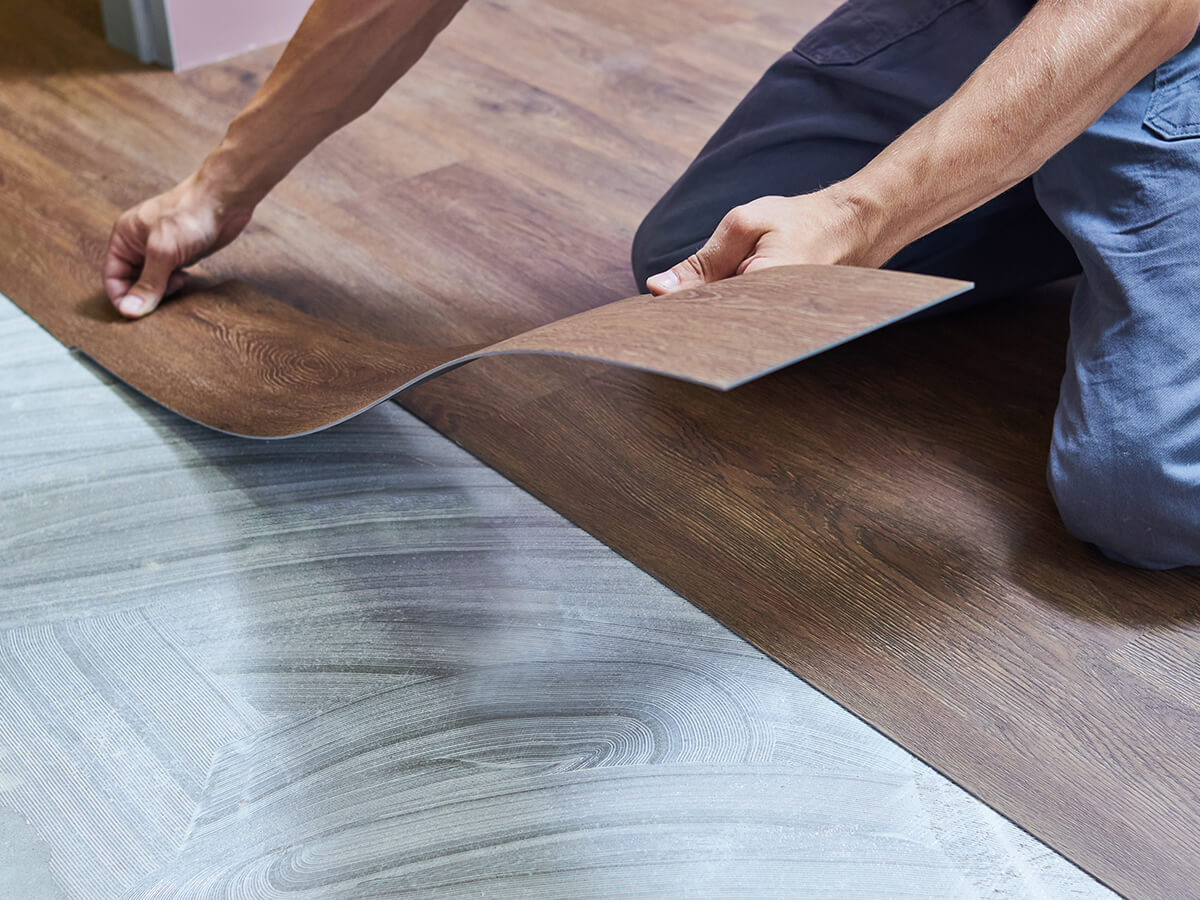
Conventional wisdom suggests waiting for spring to renovate, but conventional wisdom is often wrong. February is arguably the best time to install floating floors like vinyl.
The “Settled” House: By February, your house has fully adjusted to the heating season. The subfloor is as dry as it is going to get. Installing a floating floor now means you are building on a stable foundation.
- Adhesive Performance: If you are doing a glue-down installation (common in commercial spaces or large areas), the low humidity actually helps adhesives cure faster and more consistently than in the humid, sticky heat of August.
- Contractor Availability: Spring is the rush season. In February, you can often secure the best installation crews without the long wait times. They can take the time to prep your subfloor perfectly (levelling uneven concrete or securing loose plywood) ensuring a result that lasts for decades.
How Does Vinyl Handle the Grit of Winter?
February brings abrasive road salt and grit that acts like sandpaper on traditional wood finishes. Vinyl is armoured against this with a heavy-duty wear layer (12-30 mil), often reinforced with ceramic beads to deflect micro-scratches. Unlike brittle tile that cracks or soft wood that dents, vinyl absorbs impacts from heavy boots and tools, ensuring your floor withstand the physical abuse of the season.
What is the Maintenance Reality?
In February, you do not want to be on your hands and knees scrubbing grout lines or applying specialty waxes. You want to wipe the floor and get back under a blanket.
Vinyl is the lowest-maintenance flooring option available.
- Vacuum: Run a vacuum (without a beater bar) to pick up the salt and grit.
- Mop: Use a damp mop with a pH-neutral cleaner.
- Done: That is the entire maintenance schedule.
There is no buffing, no waxing, and no refinishing. Since the surface is non-porous, stains from red wine, coffee, or mud do not set. They sit on the surface until you are ready to clean them. For a busy household dealing with the mess of winter, this simplicity is the ultimate luxury.
Stop Fighting the Season – Renovate for Resilience
Stop tiptoeing around delicate floors this February. Premium luxury vinyl planks thrive in Canadian winters, combining natural timber aesthetics with industrial durability and thermal comfort. For the best high-performance vinyl flooring in Toronto, contact the experts at Capital Hardwood Flooring at (416) 536-2200. Build a home that stands up to the elements today.