
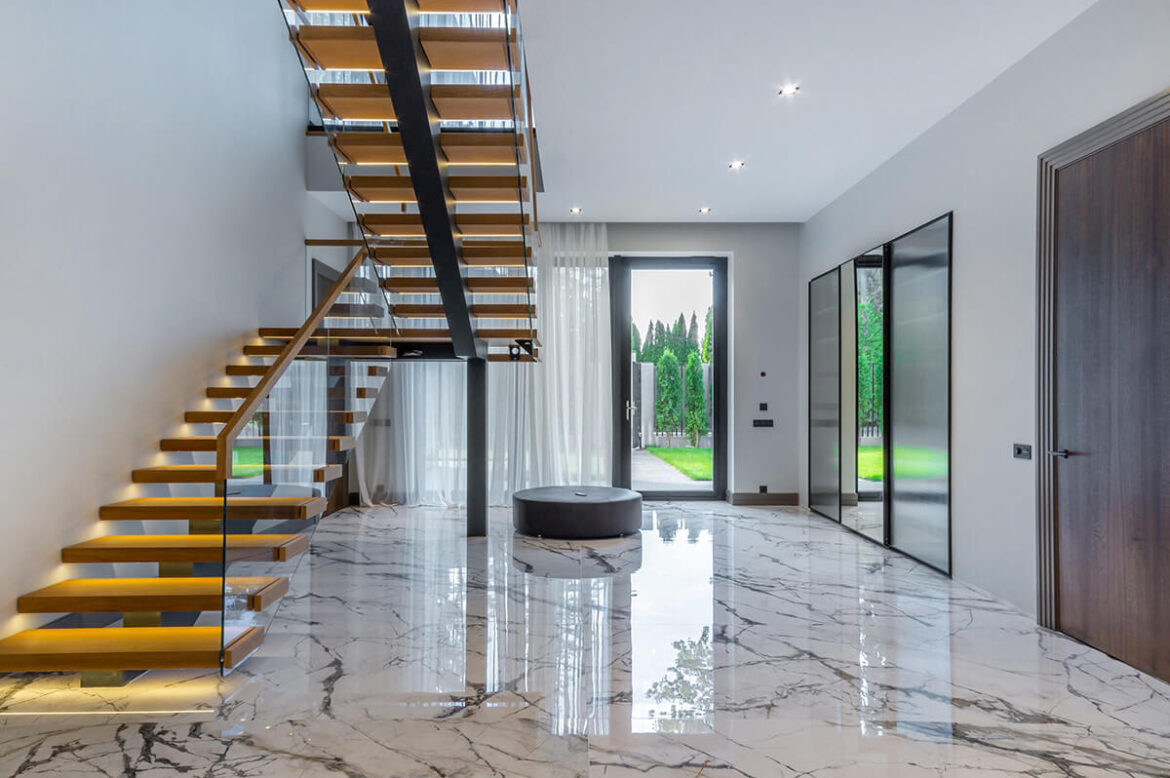
Modern floating staircases allow natural light to cascade through a home, open up cramped entryways, and serve as a stunning, modern focal point.
However, right after the initial awe, a very practical, human question usually follows: “Wait, are those actually safe?”
It is a fair question. From a psychological standpoint, our brains are wired to trust solid, enclosed structures. When we see empty space where a solid riser used to be, or a missing visible wall support, it triggers a natural hesitation. But the reality of floating staircases is far different from what the naked eye perceives. Modern engineering, rigorous building codes, and high-quality materials have transformed these seemingly precarious designs into structures that are often stronger than traditional staircases.
If you’re thinking about adding floating staircases to your home, have a look into the engineering behind the illusion, debunk the most common myths, and outline exactly what you need to know to ensure your floating staircase is as safe as it is beautiful.
How Floating Staircases Actually Work
Note that floating staircases do not actually “float.” The magic lies in clever concealment. The structural integrity of a floating staircase relies on heavy-duty engineering that is deliberately hidden from view.
There are a few primary ways these stairs are constructed:
- The Hidden Cantilever
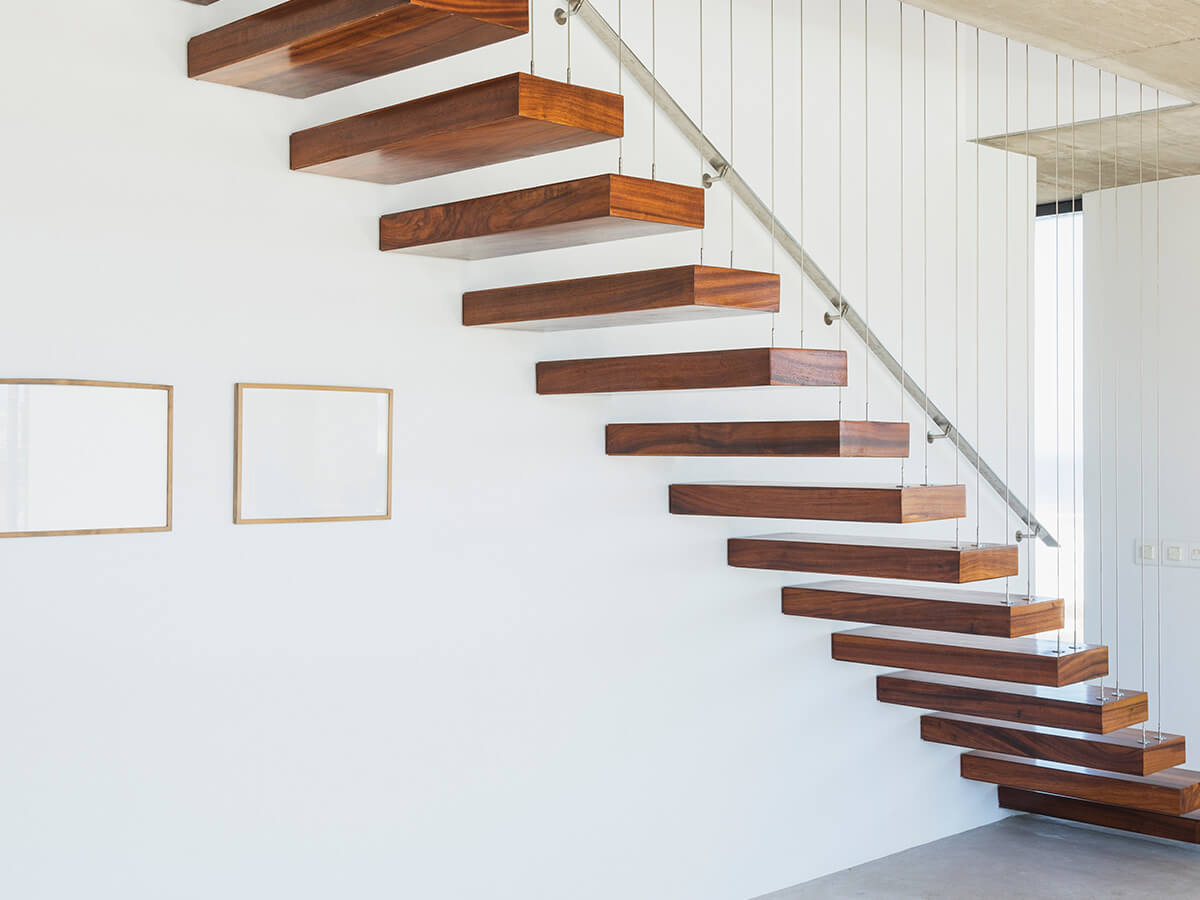
In a true cantilevered staircase, the treads are anchored directly into a reinforced load-bearing wall. During the framing stage of the house, a massive steel stringer or heavy timber framework is bolted into the wall. Steel plates or rods extend from this hidden spine out into the room. The wooden treads are then hollowed out and slipped over these steel protrusions like a glove, hiding the structural metal completely.
- The Mono-Stringer
Instead of two wooden zigzagging beams (stringers) on either side of the stairs, a mono-stringer uses a single, heavy-duty steel beam running directly under the center of the treads.
- Glass Balustrade Supports
In some modern designs, structural, tempered architectural glass acts as the invisible wall supporting one side of the treads, giving the illusion that the wood is floating.
In all of these scenarios, the structural support is immense. Now, let’s tackle the misconceptions.
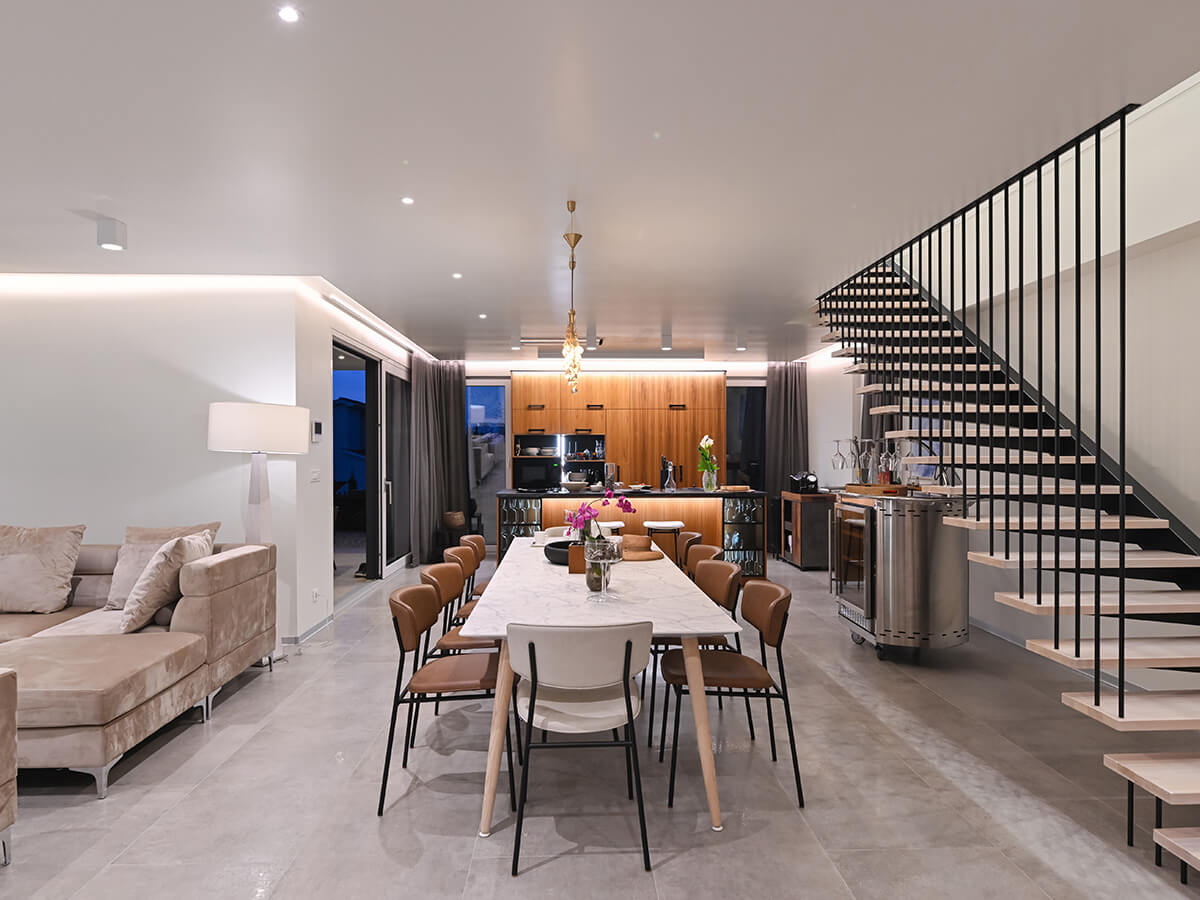
The 5 Biggest Myths About Floating Staircases
Myth 1: They are fundamentally unstable and will bounce or sag.
The Reality: A properly engineered floating staircase is incredibly rigid. Because the aesthetic relies on a minimalist look, the hidden materials used must be excessively strong to prevent “deflection” (the technical term for bouncing or sagging). A traditional staircase distributes your weight across multiple wooden stringers, risers, and floor joists. A cantilevered floating staircase transfers all that torque directly into the wall. To handle this, the hidden steel wall stringer is often welded, heavy-gauge steel. When engineered correctly, a single floating tread can safely hold upwards of 500 to 1,000 pounds without moving a millimetre.
Myth 2: You cannot have handrails, making them a falling hazard
The Reality: The “floating” aesthetic does not require you to abandon handrails; it just requires a different approach to them. Photographs in architectural magazines often show floating stairs without handrails for maximum visual impact, but this is rarely legal or safe for a residential home. You can absolutely incorporate safety barriers. The most popular choice is frameless, tempered glass panels. This provides a solid, climb-proof barrier that satisfies safety requirements while maintaining the invisible, airy aesthetic. Alternatively, thin steel cables or minimalist metal handrails can be installed to provide a firm grip without visual clutter.
Myth 3: They are illegal and won’t pass building codes
The Reality: Floating staircases are perfectly legal in Canada, provided they are built to code.
Building inspectors do not care about the style of your stairs; they care about the math and public safety. In Canada, your local building authority enforces provincial and territorial building codes, which are based on the National Building Code of Canada (NBCC) (PDF) published by the National Research Council of Canada. These codes have strict regulations regarding tread depth, riser height, and load-bearing capacity (specifically outlined in Part 9 of the NBCC for housing and small buildings). A reputable contractor will work with a structural engineer to provide stamped drawings proving that the hidden steel supports and cantilevered design meet or exceed all Canadian structural load requirements.
Myth 4: Open risers are dangerous for children and pets
The Reality: This is a valid concern, but one that is easily solved by design. The “riser” is the vertical space between each step. Traditional stairs have closed risers (solid wood). Floating stairs usually have open risers. The danger is that a small child or pet could slip through the gap. To mitigate this, building codes strictly enforce the “4-inch rule.” This rule dictates that the open space between treads must be small enough that a 4-inch sphere cannot pass through it. To achieve the floating look while obeying this rule, builders use thicker wood treads (often 3 to 4 inches thick) or install a subtle “lip” or a clear glass/acrylic block under the tread to reduce the gap size without ruining the aesthetic.
Myth 5: Wood treads will crack or snap under the pressure
The Reality: Standard stair treads might, but floating stair treads are built differently. You cannot simply use a standard 1-inch thick piece of pine for a cantilevered stair. Floating treads are usually custom-fabricated from dense, high-quality hardwoods like White Oak, Hard Maple, Walnut, or Hickory. Furthermore, they are often designed as “box treads”—essentially a hollow, structural box that slides over a heavy solid steel plate. The wood is merely the beautiful skin over a skeleton of industrial steel.
What You Need to Know Before Installing a Floating Staircase
If you are convinced that a floating staircase is the right aesthetic choice for your home, safety must remain at the forefront of the planning process. Here are the critical factors you must address before construction begins.
1. The Wall is Everything (Structural Integrity)
You cannot attach a cantilevered floating staircase to a standard drywall-and-stud wall. The twisting force (torsion) applied to the wall when someone steps on the far edge of a tread is massive.
- New Builds vs. Renovations: It is vastly easier to install a floating staircase during a new home build, as the heavy steel spine can be integrated into the framing of the house.
- Retrofitting: If you are renovating, the existing wall will likely need to be torn open and heavily reinforced. This might involve adding steel columns, heavy timber blocking, or even pouring concrete to ensure the wall can handle the sheer force of the stairs.
2. Guardrails vs. Handrails
It is important to understand the difference between these two safety features, as you will likely need both.
- Handrails: This is the bar you grip with your hand as you walk up or down. Codes typically require a handrail to be between 34 and 38 inches above the tread nosing.
- Guardrails (Guards): This is the physical barrier that prevents you from falling off the open edge of the staircase. Codes dictate that any walking surface more than 30 inches above the floor must have a guardrail, usually standing at least 36 inches high. As mentioned earlier, structural glass is the best way to achieve this while maintaining the floating look.
3. Surface Friction and Slip Resistance
Because floating stairs can induce a slight sense of vertigo for some users, ensuring a firm footing is paramount. Polished, high-gloss wood finishes can be incredibly slippery in just a pair of socks. To prioritize safety, opt for a matte or satin finish on your hardwood treads. Wire-brushed or hand-scraped hardwood textures provide excellent micro-grip for your feet. If you prefer a smooth finish, consider routing subtle anti-slip grooves into the leading edge of each step, or applying clear, discreet anti-slip adhesive strips.
4. The Importance of Staircase Lighting
Visibility is safety. The minimalist nature of floating stairs means there are fewer visual cues for your brain to process where the next step is. Shadows cast by open risers can sometimes trick the eye. Integrating lighting into your floating staircase is not just an aesthetic upgrade; it is a crucial safety feature. LED strip lighting can be hidden in a routed groove beneath the lip of each tread, illuminating the step below it. Alternatively, low-level wall-recessed lights that wash light across the surface of the treads will ensure safe navigation at night without requiring the main house lights to be turned on.
5. Precision Engineering Is Non-Negotiable
A standard staircase can be built by a skilled framing carpenter using basic math and standard lumber. A floating staircase is an entirely different beast. It requires architectural precision, metallurgical knowledge for the steel supports, and master-level woodworking to seamlessly wrap the steel in hardwood. Tolerances are incredibly tight—a steel bracket that is out of level by even a fraction of a degree will result in a noticeably crooked step.
The Verdict: Beauty Without Compromise
So, are floating staircases safe? The definitive answer is yes, but with a vital caveat: they are only as safe as the engineering, materials, and professionals behind them.
When designed by a structural engineer, fabricated with premium steel and solid hardwoods, and installed by experienced craftsmen who adhere strictly to local building codes, a floating staircase poses no more danger than a traditional set of enclosed stairs. They offer a unique blend of industrial strength and airy elegance, proving that you do not have to sacrifice safety to achieve breathtaking modern design.
Elevate Your Home
If you are ready to explore the stunning possibilities of custom wood treads for a modern floating staircase, you need a team that understands the intersection of flawless design and unwavering safety.
Whether you are looking to perfectly match your new stairs to a beautiful new hardwood floor or you are integrating them into an existing space, contact Capital Hardwood Flooring today to discuss premium options that will bring your architectural vision to life.
You can reach our experts directly to start your project by calling 416-536-2200 or by emailing [email protected].