
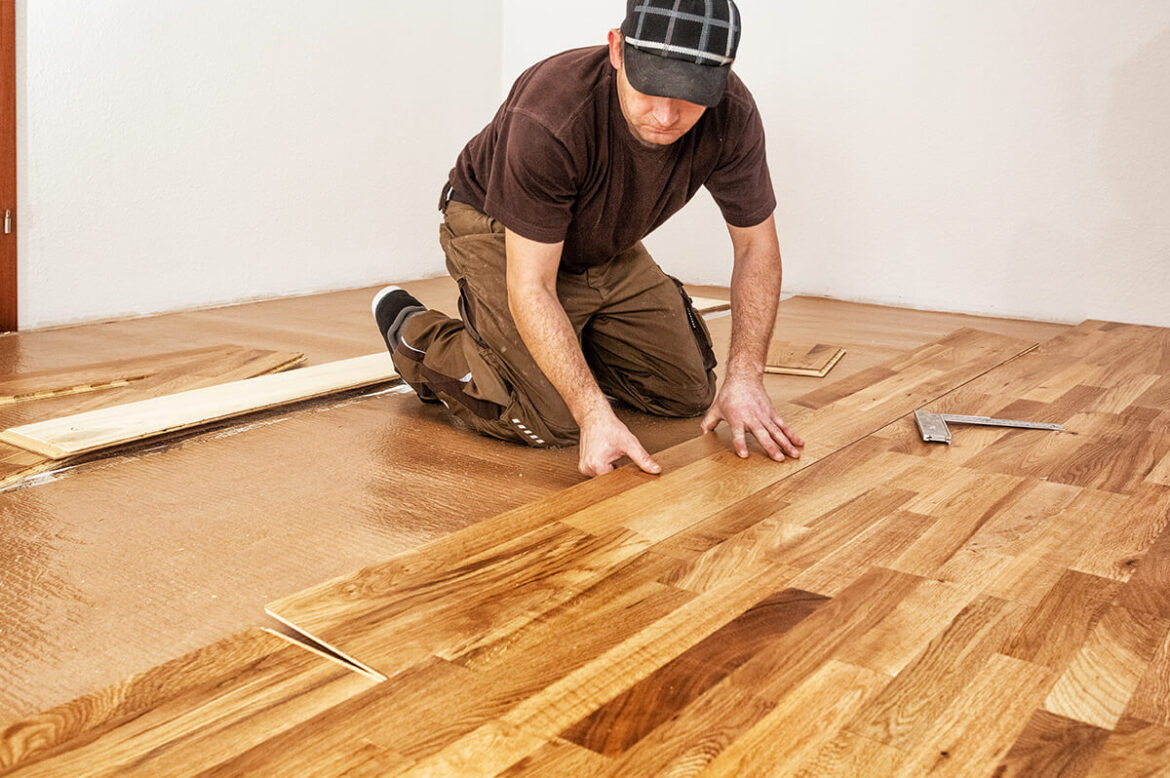
February in Toronto forces us indoors, where worn floors and outdated tones become impossible to ignore. While instinct suggests waiting for spring, savvy homeowners recognize winter as a strategic window for upgrades. Engineered flooring proves its worth now, offering immediate warmth and long-term structural stability against the volatile climate.
Why Is Engineered Flooring the Ideal Winter Upgrade?
At -20°C, homes require insulating comfort. Unlike tile or stone, which act as cold thermal bridges, engineered flooring provides a natural thermal break. Its genuine hardwood top layer retains ambient heat, offering superior tactile warmth compared to synthetic vinyl. Installing it in February instantly improves a room’s thermal profile, making the space physically warmer when needed most.
How Does the February Climate Benefit Installation?
There is a pervasive myth that you cannot install floors in the winter. The reality is quite the opposite. February offers the most stable indoor humidity conditions of the year, providing a technical advantage for installation.
Wood is hygroscopic; it breathes. It absorbs moisture in the summer and releases it in the winter.
- The Shrinkage Factor: In the dry air of a Canadian winter, wood contracts. If you install solid wood in a humid July, it will inevitably shrink and show gaps by the following February.
- The Winter Advantage: By installing engineered floors now, you are acclimating the wood to the driest conditions it will face. The boards are installed tight. As humidity rises in the spring, the wood expands slightly, locking the joints even tighter together.
This timing eliminates the risk of “winter gapping,” a common complaint with wood flooring in Toronto that was installed during the humid summer months without proper acclimation.
What Makes the Core Construction So Stable?
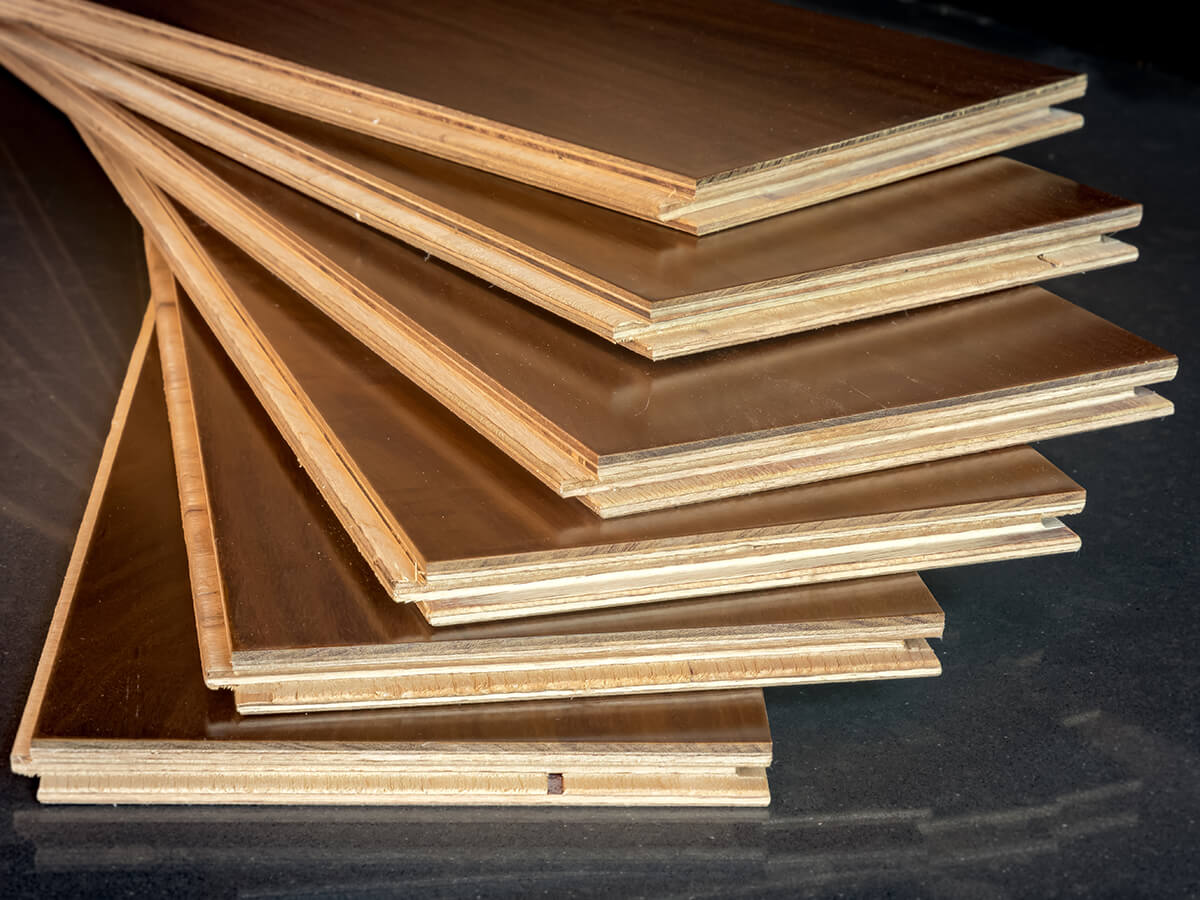
The true genius of engineered flooring lies beneath the surface. To understand why it is the superior choice for our climate, you have to look at the cross-section.
Solid wood is anarchic; it moves wherever its grain dictates. Engineered flooring is disciplined. The core is typically made of high-quality plywood (often Baltic Birch) stacked in alternating directions. This cross-ply construction creates a mechanical tension that prevents the wood from moving.
- Resistance to Cupping: When the relative humidity fluctuates, the layers fight against each other, keeping the plank flat.
- Wide Plank Capability: This stability allows for planks that are 180, 200, or even 250 millimetres wide; dimensions that would warp or buckle if they were solid wood.
This structural integrity is what allows you to renovate with confidence, knowing the floor you lay down in the dry winter will look exactly the same in the humid summer.
What Are the Environmental Implications?
Flooring sustainability is nuanced. According to a study, multi-layer engineered wood flooring has the highest environmental impacts, followed by laminated, three-layer engineered wood flooring, and solid wood flooring (Lao et al., 2024). Production energy and adhesives create a higher initial carbon footprint than solid oak, though this accounts only for the manufacturing phase.
- Yield Efficiency: Engineered flooring uses valuable slow-growth hardwoods only for the top layer, allowing one oak tree to cover four times the floor area of solid wood.
- Longevity: A floor that remains stable and does not need replacing for 30 years offers a different kind of sustainability.
While the manufacturing impact is higher, the resource efficiency of the precious hardwood face makes it a balanced choice for those looking to maximize the use of slow-growing timber species.
Is Engineered Wood Compatible with Condo Living?
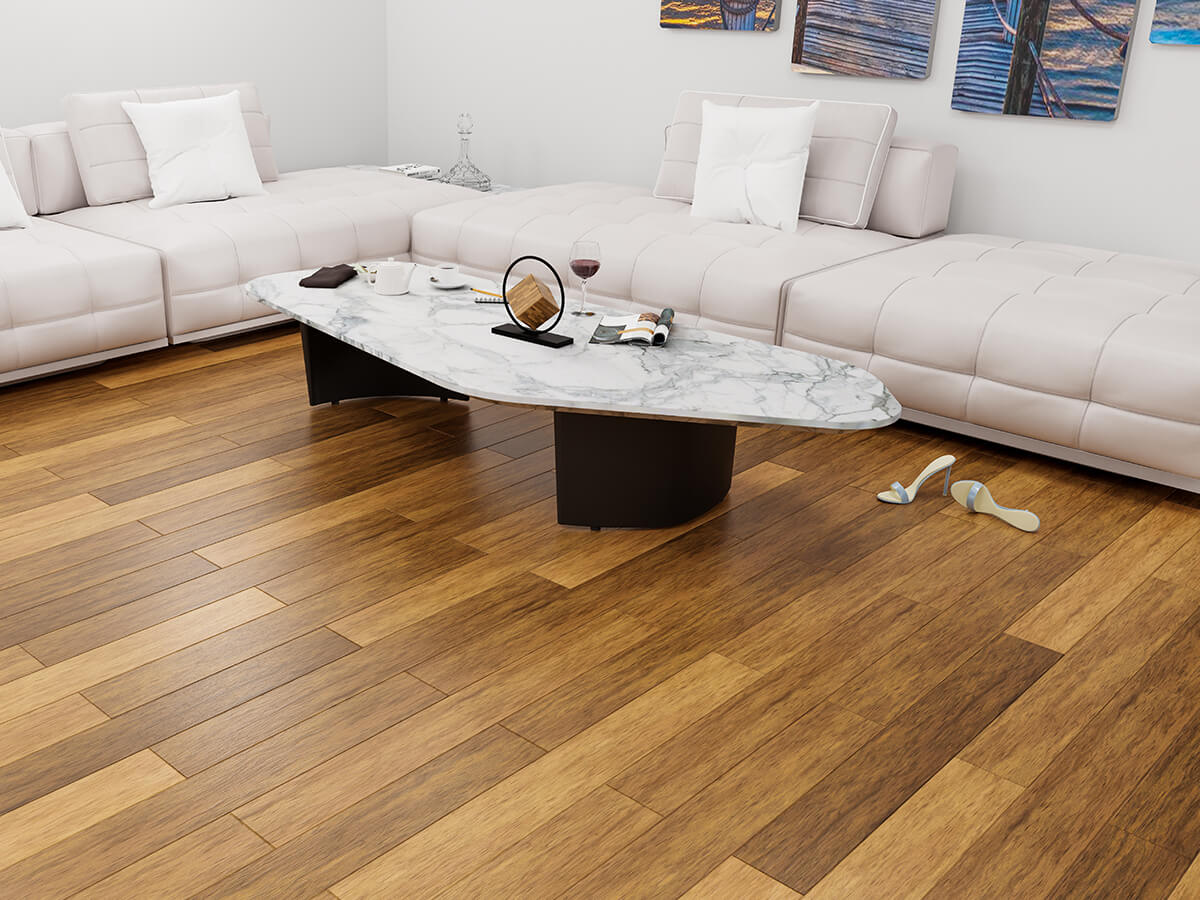
February is often the prime time for condo renovations, as exterior maintenance is on hold. For high-rise dwellers, the floor is not just a surface; it is a sound barrier.
Engineered flooring is the gold standard for condos because of its compatibility with acoustic underlayments.
- Floating Installation: Unlike solid wood, which must be nailed to a subfloor, engineered planks can be “floated” (clicked or glued at the joints) over a specialized sound-dampening membrane.
- Impact Insulation Class (IIC): This setup significantly reduces the transfer of footfalls to the unit below, keeping you in the good graces of your neighbours and your condo board.
Furthermore, the thinner profile of engineered boards (usually around 16 or 19 millimetres) makes it easier to match heights with existing kitchen tile or entryways, avoiding the need for bulky transition strips that ruin the visual flow of a small unit.
How Does the “Wear Layer” Affect Longevity?
A common fear is that engineered floors are “disposable” compared to solid wood. This depends entirely on the wear layer; the thickness of the hardwood veneer on top.
- The Economy Option: Entry-level engineered floors often have a wear layer of 1mm to 2mm. These cannot be sanded and refinished. Once they are scratched, they are done.
- The Investment Option: High-quality engineered floors feature a “sawn” wear layer of 4mm to 6mm. This is essentially a solid floor on top of a stable core.
A 4mm wear layer can be sanded and refinished 2-3 times, offering a lifespan of 40 to 60 years. When renovating in February, you are likely dealing with the grit and salt tracked in from the street. Choosing a product with a substantial wear layer ensures that your floor can withstand decades of Canadian winters and can be refreshed down the line, protecting your investment.
Can Light Floors Combat Winter Gloom?
Renovating in February highlights the importance of light. With the sun setting early, our homes can feel cavernous. The floor is the largest continuous surface in a room, and its colour dictates the light reflectance of the entire space.
Current design trends are shifting away from the dark, espresso tones of the early 2000s toward lighter, airier aesthetics.
- Blonde Woods: White Oak, Ash, and bleached Maple are dominating the market. These tones bounce light back into the room, making spaces feel larger and brighter even on overcast days.
- Matte Finishes: High-gloss finishes show every speck of winter salt and dust. Modern matte or satin finishes hide imperfections and cleaning streaks, making them far more forgiving during the messy winter months.
Build a Foundation for All Seasons
February is for improvement, not hibernation. Prioritize comfort and long-term value with flooring engineered for our climate extremes. You gain the warmth of real wood, advanced stability, and modern aesthetics; a smart winter investment. For the finest selection of durable engineered flooring in Toronto, connect with Capital Hardwood Flooring at (416) 536-2200. Stop waiting for spring; start building your dream home today.